A cabinet body that does not absorb water
Aluminum does not swell from absorbed moisture like exposed wood-based substrates can. Sink zones, edges, seams, coatings and hardware are still coordinated and verified for each project.
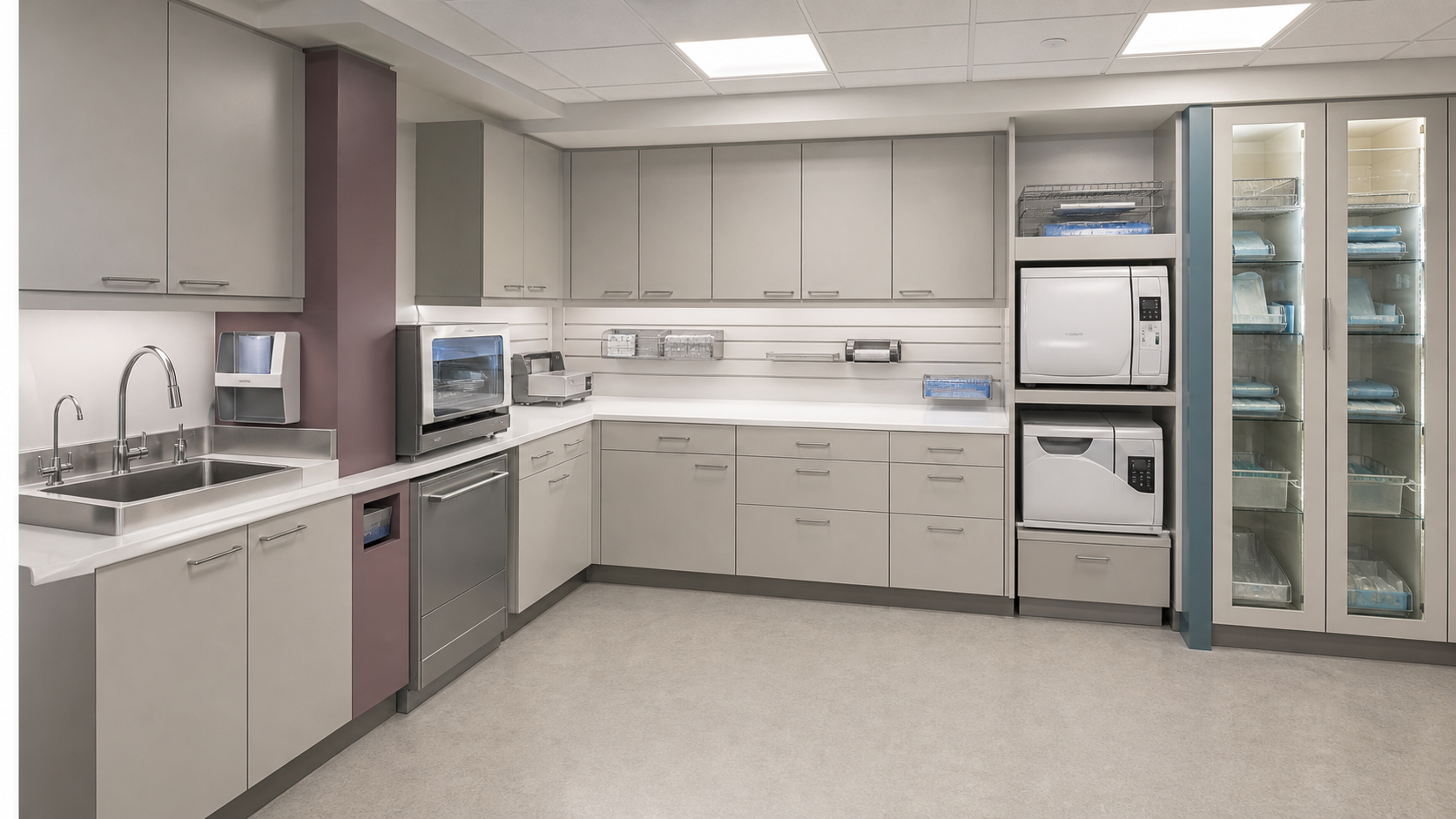
WHY BPA / MATERIAL + SYSTEM
THE MATERIAL DIFFERENCE
The advantage begins beneath the finish. BPA plans the cabinet body, connections and replaceable components as one coordinated system—then verifies the final construction for the approved room and use.
Aluminum does not swell from absorbed moisture like exposed wood-based substrates can. Sink zones, edges, seams, coatings and hardware are still coordinated and verified for each project.
An aluminum cabinet body eliminates particleboard and plywood from the carcass, so damaged edges cannot release wood chips or sawdust into drawers, service cavities or clean-storage zones.
Aluminum itself does not provide cellulose for mold. Smooth, accessible surfaces support routine cleaning; moisture, residue, joints and adjacent materials must still be kept clean and dry.
Termites and wood-boring insects do not consume aluminum. Openings, wall conditions and non-metal components remain part of the building's overall pest-management plan.
Folded metal construction, replaceable hardware and project-selected finishes create a serviceable platform for high-use rooms. Final gauge, joints, loads and cycle life are released only after engineering validation.
Metal-to-metal connections and reinforced mounting zones can be engineered around drawers, doors, worktops, wall anchorage and mobile bases instead of relying on staples driven into low-density board.
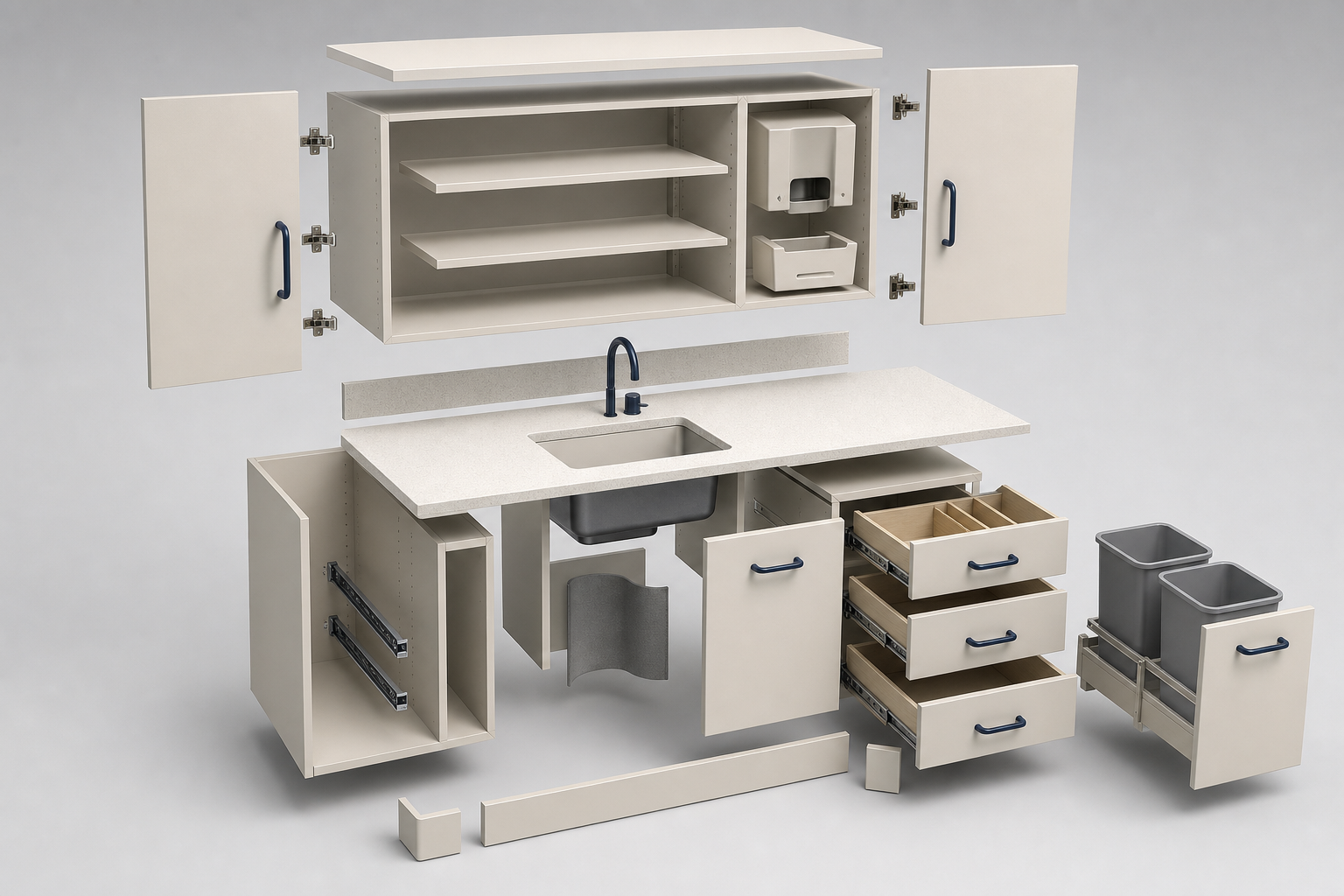 ENGINEERED ASSEMBLY / PROJECT-VALIDATED DETAILS
MORE THAN A METAL BOX
CABINET-BODY COMPARISON
This comparison addresses the cabinet body—not every possible finish or assembly. Performance varies with alloy, gauge, coating, fabrication, hardware, installation, maintenance and the exact wood product being compared.
CLAIMS WITH A RELEASE PATH
Material facts support planning decisions. Final waterproofing, cleanability, chemical resistance, structural load, anchorage and cycle-life claims require the selected alloy, finish, hardware, assembly and test method to be documented.
Request material information →